 Michigan recently signed into law new regulations regarding the purchase and use of high powered fireworks. Before this law passed, Michigan had in place some of the stricter regulations in the entire country. Many residents drove to border states to buy their precious fireworks for the 4th of July. The State of Michigan was hurting from this lost revenue and has decided to change the law. With the economy in Michigan being what it is, I see this change as a good thing. Obviously there is concern with the possibility of more accidents occuring, but I feel people got their fireworks whether they were from Michigan or not. This law also increases the fees corresponding to selling and using upgraded fireworks. If you are a business in Michigan selling this new class of fireworks, you must pay a $1000 fee for permanent business locations or a $600 fee for a non-permanent location. Consumers will also pay increased prices for their fireworks. A 6% fireworks safety fee is being applied to purchases from consumers. Hopefully this change will provided some much needed revenue for the struggling Michigan economy.
Blog Posts
Do I have to pay my Driver Responsibility Fee? – Snyder Passes New Law in Michigan
 Rick Snyder just signed into law a bill that is going to eliminate driver responsibility fees for specific offenses. Starting for offenses occurring after October 1, 2011 drivers will no longer be assessed driver responsibility fees for the following offenses.
Accumulating seven or more points on a driving record.
Driving without a valid license.
Failing to produce proof of insurance.
Failing to have no-fault insurance under the Insurance Code.
While driver responsibility fees will not be levied for these offenses occurring after October 1, 2011, driver reasonability fees will still be charged in offenses where a person is convicted of drunk driving and/or impaired driving such as a charge for an OWI, OWID, or an OWVI. The fees for these offenses will remain unchanged and generally require $1,000.00 for a period of two years or greater.
This change in the current law is a step in the right direction for eliminating unnecessary fees for drivers; however, there remains a lot of room for improvement in the laws that still remain on the books.
Michigan May Allow Stun Guns and Tasers
 A proposal which would allow residents to own a stun gun is going through the Michigan Legislature currently. There are already 44 other states that have enacted such measures. The Michigan senate already approved the measure by a vote of 35-3, indicating it won’t face too much opposition.
The measure will make it perfectly legal for residents to own a stun gun permitting they have a current concealed pistol license. Although the weapon is considered non-lethal, there have been many instances where death has occured due to heart failure resulting from the electrical shock from the device. Most of these cases actually involve the police, since the majority of stun-gun owners are law enforcement officers.
I agree that a stun-gun is less dangerous than a real firearm, but there are other considerations to account for. I know I would be more likely to use a stun gun than a real firearm since the result most likely doesn’t end in death. I’m sure others think this way as well and we don’t really know enough about the long-term consequences, or how willing people will be using one. I mean this is the country where pepper spray is used to get the best deals on black friday at Wal-Mart, who knows what we’ll do with a stun gun! I will keep you updated and let you know if this measure passes through legislature.
I’ve Been in a Car Accident in Michigan, Can I Sue?
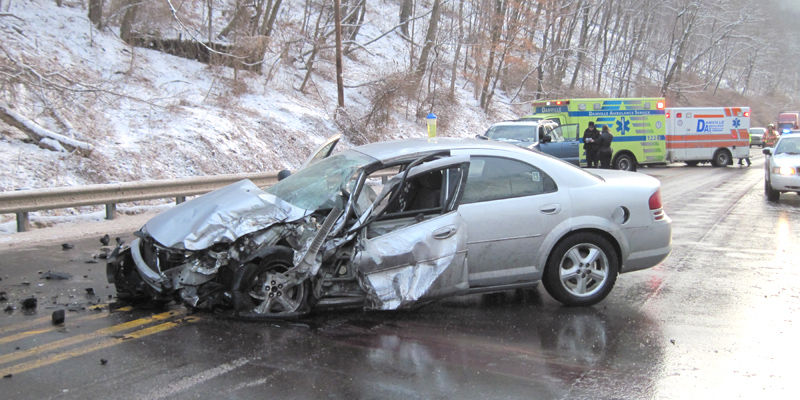 In Michigan, when you are injured in an auto accident, suing the other driver is not always a possibility. This is because in Michigan we have what is called a no-fault system. Most injuries and accidents that are not serious, result in your own insurance company paying what is called “first party” benefits for the accident. First party benefits generally include reimbursement for lost wages and medical expenses.
However, even with the no-fault system in place you can still sue the driver who caused the accident if your injuries meet the threshold. What is a threshold injury? The threshold has changed over the last couple of years with our Supreme Court’s most recent ruling on the issue in McCormick v. Carrier. Generally, the threshold is met when your injury results in a
Serious impairment of a body function
Permanent serious disfigurement or
Death.
The last two definitions are pretty obvious, but a serous impairment of an important body function takes a little analysis to pin down. Every situation is different as the facts surrounding every injury are not the same and there is no bright line test to let us know for sure whether a specific injury meets this threshold. The factors that the courts use to determine whether an injury is a serious impairment of body function are as follows:
Is your injury objectively manifested (observable or perceivable from actual symptoms or conditions)?
Did the accident leave you with an injury of a body function that is important (a body function of value, significance, or consequence to you)?
Does the injury affect your general ability to lead a normal life (influences some of your capacity to live in a normal manner of living).
Other factors
As you can see, sometimes it can be difficult to determine whether an injury meets this threshold which would allow you to sue the driver at fault for the accident. Every case and every injury is different so whether your injury resulted in a broken bone, back problems, ligament tears, knee, shoulder, or other problems such as scaring or burning it is important figure out what your rights are and whether your injury may meet the threshold.